

Northern Lights Photography | How to Get Amazing Photos
For many travelers, the Northern Lights, or Aurora Borealis, is that “once in a lifetime” experience they want to capture as beautifully as possible. One of the best ways to preserve the Northern Lights is through photography.
Photographing the Northern Lights in Lapland’s arctic conditions is a unique challenge. It requires more than just a good camera. A successful shot depends on the right settings, preparation for the cold, and plenty of patience.
In this guide, we’ll cover the basics to help you capture the Northern Lights, whether you’re using a DSLR camera or a smartphone.
Below, you can also read more about the Northern Lights or explore tourism companies that organize Northern Lights tours!
How to photograph the Northern Lights?
Photographing the Northern Lights is not for those in a hurry, but when the moment arrives, the photographer must be ready.
Sometimes the Northern Lights last only a brief moment, or the most spectacular displays may be visible for just a few seconds.
For these reasons, it’s important that the photographer has their equipment ready before starting to shoot.
Let’s take a look at what settings you should prepare in advance. Below are instructions for both DSLR cameras and smartphones.
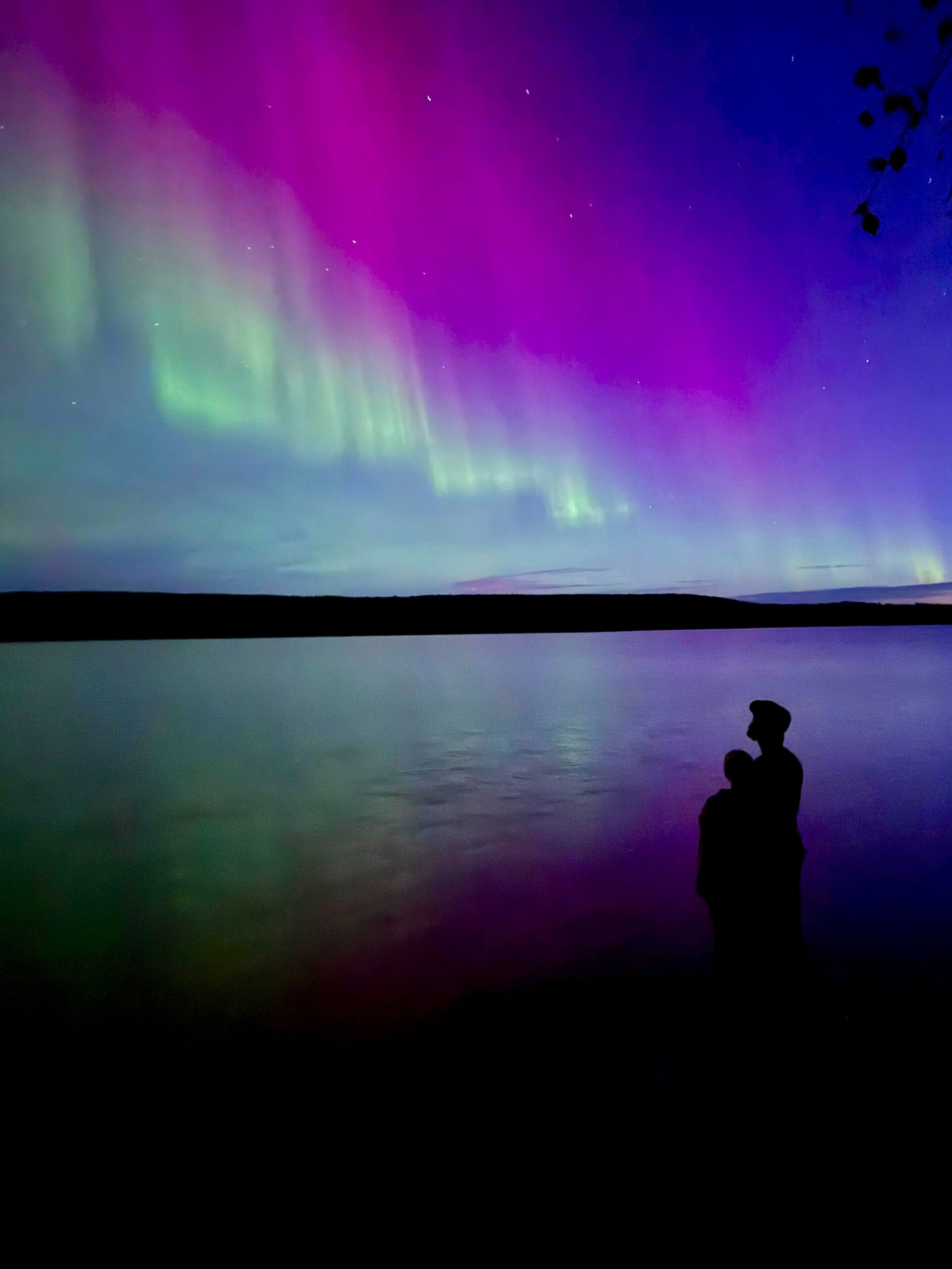
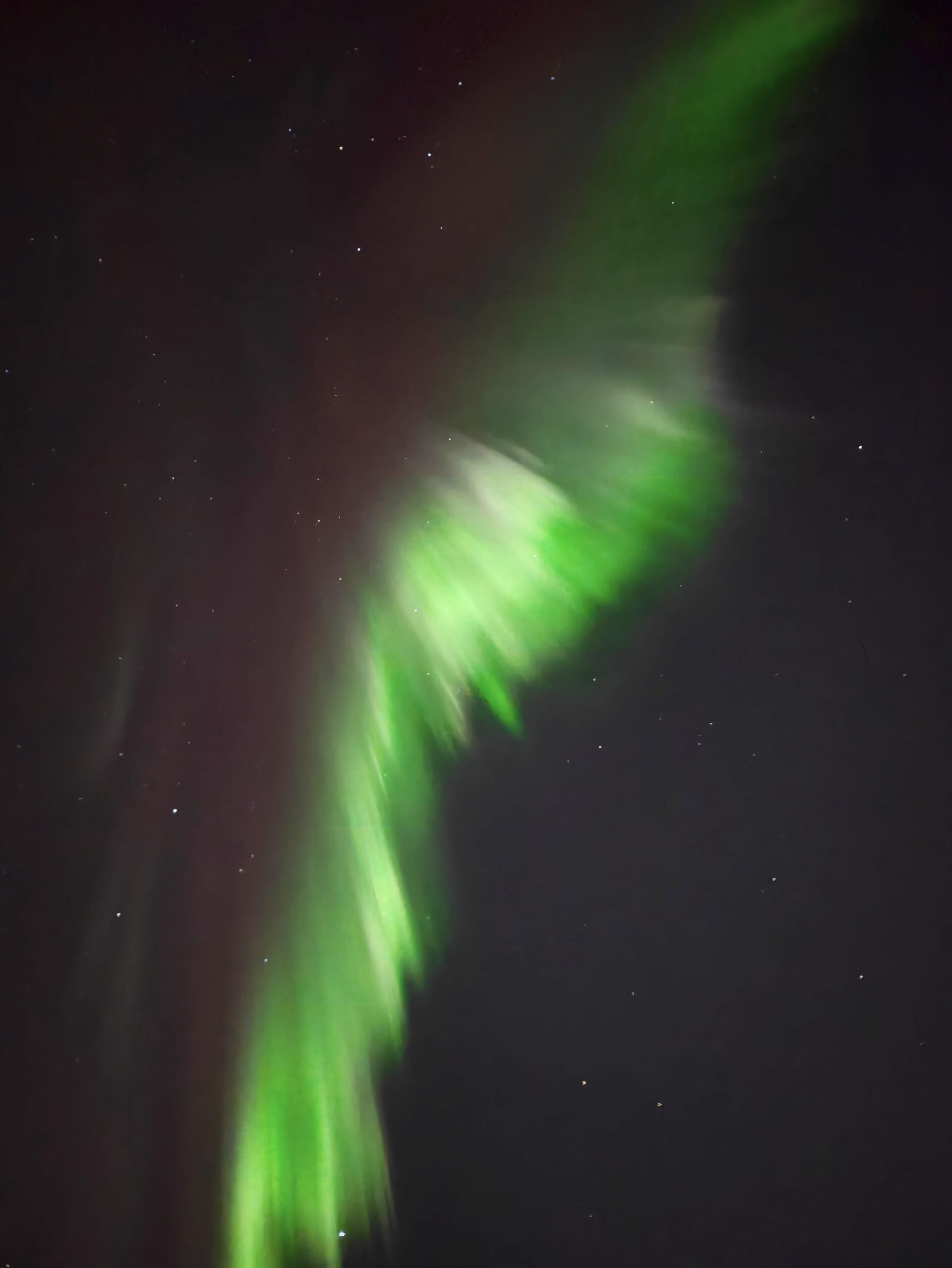
PS. All the Northern Lights photos in this article were taken with a smartphone.
Basic DSLR Camera Settings
If you’re using a DSLR camera, forget automatic settings immediately. Capturing the Northern Lights in a quality photo requires manual adjustment of features:
- Shutter Speed: If the Northern Lights are moving slowly across the sky, try 5–15 seconds. If the Northern Lights are very active and moving quickly, shorten the time (2–5 seconds) to keep the shapes sharp.
- Aperture: Use the smallest f-number possible (e.g., f/2.8 or f/4) so the camera captures as much light as possible.
- ISO Value: Increase the ISO value (e.g., 1600–3200) to make the sensor more sensitive to light. However, watch out for excessive “noise” in the image.
- Focus: Set the lens to manual focus and adjust it as high as possible.
Tip: Quality photos are practically impossible to get without a proper tripod. A tripod can be considered essential equipment. Even the slightest camera shake during a long exposure will ruin the photo.
How to photograph the Northern Lights with a smartphone?
These days, it’s actually pretty easy to take decent photos with a smartphone! Today’s top-of-the-line smartphones are surprisingly capable when it comes to certain features for photographing the Northern Lights.
Here are the most important tips for smartphone photographers:
- Use Night Mode and make sure the phone is completely still (preferably on a tripod).
- If your phone has a “Pro” mode, manually adjust the exposure time to 2–10 seconds.
- Turn off the flash – it’s completely useless for Northern Lights photography and ruins the experience for others too.
What else should you remember when photographing the Northern Lights?
The Northern Lights are, of course, a natural phenomenon that unfortunately won’t wait like a photo model for everything to be perfect. However, there are a few things you can do to be better prepared to take quality photos.
The cold presents its challenges
On a winter night in Rovaniemi, the temperature can drop to -30 degrees Celsius, and this is the biggest challenge for the technology. When taking photos, you should be prepared for any problems caused by freezing temperatures.
These might include the following. However, tips are included on how you can avoid these problems.
- Battery life: The cold drains batteries quickly. Keep spare batteries in your jacket’s inner pocket close to your body.
Camera fogging: When you come back inside to warmth, don’t take the camera out of the bag immediately. Let it warm up in the closed bag for a couple of hours to prevent moisture from condensing inside.
Don't settle for just the sky
Don’t just take pictures of the sky. The most stunning photos of the Aurora Borealis are captured when you include elements from the landscape in the frame: snow-covered trees, the silhouette of a fell, or even a traditional Lappish hut.
One wonderful way to take a Northern Lights photo is to ask someone important to you to join the composition. A person in the photo provides scale and makes the shot more personal.
Or perhaps a photography safari specializing in Northern Lights photos?
Even if you know your camera settings, photographing the Northern Lights is still extremely challenging. For example, finding the right place and time can be challenging.
Rovaniemi has specialized photography safaris designed specifically for those who want the perfect shot. You can also find these services listed on our site.
Is it worth paying for Northern Lights photos and the trip? We think so, and here are a few reasons why:
- Guides are professional photographers: On professional photography safaris, the guides know Northern Lights photography inside out. They consistently succeed time after time, which can be difficult for first-timers.
- Rental equipment: Many companies rent quality tripods and even cameras.
- Ready-made portraits: Often the guide will take stunning photos of you and your group under the Northern Lights, allowing you to simply focus on enjoying the phenomenon.
Want to return home with the most amazing photos possible of the celestial fires? Explore Rovaniemi’s best Northern Lights tours below and make sure you head back home with a brilliant Northern Lights photo as your keepsake.
Hey, tour operator! Want your company to be known to travelers?
Do you offer Northern Lights photography or Northern Lights tours? Read more or get in touch and join our site.

